RDO accused of timeshare lobbying in Spain to overturn consumer protection laws

Clandestine, timeshare-funded RDO spending drive accused of lobbying Spanish politicians to roll back key protections for timeshare owners
Resort Development Organisation (RDO)
RDO states on its website that it protects consumers and offers arbitration when disputes arise.
However, evidence suggests the opposite, indicating RDO’s underlying aim is to defend the interests of the timeshare companies that fund it, protecting them from adverse publicity and legal action.

One consumer expert has described RDO as a “cabal”, citing its secretive and highly partisan behaviour. Its senior management boards are said to be dominated by men who have accumulated significant wealth through decades of what critics describe as consumer abuse.
The RDO Legislative Council reportedly includes in-house lawyers provided by major timeshare brands, including Marriott, Hilton and Club la Costa, alongside leading exchange companies such as RCI and Interval International.
A law unto themselves?
RDO’s more subversive recent activity is said to include sustained efforts to undermine a landmark Spanish Supreme Court decision which opened the way for tens of thousands of mis-sold owners to claim compensation for unlawful timeshare contracts.
Funded by timeshare benefactors, RDO has appointed two top-tier consultancies with strong political connections: PricewaterhouseCoopers (PwC Spain) and specialist lobbying firm Acento.

Representatives from both companies opened discussions with Spanish officials and politicians, including senior figures within the Spanish Ministry of Tourism and the Ministry of Justice, as well as regional authorities.
Political representatives were contacted across several autonomous communities, including Catalunya, the Canary Islands, the Balearic Islands, and the Valencian and Andalusian regions.
Greed vs consumer rights
The stated objective was to build political support to effectively neutralise the Spanish Supreme Court ruling by amending key consumer-protection legislation designed to prevent harmful and deceptive sales practices.
These protections took years of legal battles to enforce properly. Critics argue the timeshare industry is now trying to strip owners of hard-won rights and limit access to restitution.

To pursue this objective, private meetings were reportedly arranged with ministers, influential politicians and lawmakers. Lobbyists and timeshare industry lawyers are said to be advancing the argument that, for Spain’s economy, the priority should be shielding timeshare companies from the “consequences” of the Supreme Court decision.
Convenient point of view
Following this lobbying, support was secured to amend Spanish Law 42/1998, and amendments have been filed in the Spanish parliament.
The amendment documents show how the timeshare industry has framed its case: as a major contributor to the Spanish economy and, notably, as the “victim” of a Supreme Court injustice.
A key statement within the amendment documentation states - “The (current) situation described has not only slowed down any development of timeshare activity, with the loss of opportunity in a key sector of our economy such as tourism, but has also led to bankruptcy or put at risk the economic viability of companies in the sector, destroying direct and indirect employment.”

At present, multiple senior politicians appear to have been persuaded to back changes that would shift consumer protection rules in favour of large businesses previously found to have harmed customers.
Has timeshare suffered as badly as they claim?
In one respect, yes. Timeshare is an emotional purchase. Most people don’t plan to buy a timeshare; they are typically drawn in through expensive marketing and converted through high-pressure sales presentations. That style of selling has been halted.
Timeshare companies can still trade, but with restrictions closer to the way you would sell a house or car. Without their old tactics, many operations in Spain reportedly cannot sell anything like the volumes they once achieved when they could deploy their full range of manipulation techniques.
Put simply, the sales that no longer happen are the very ones the law — and arguably most of society — considers unfair and immoral.
As for broader financial “suffering”? The claim here is no — they still make money.
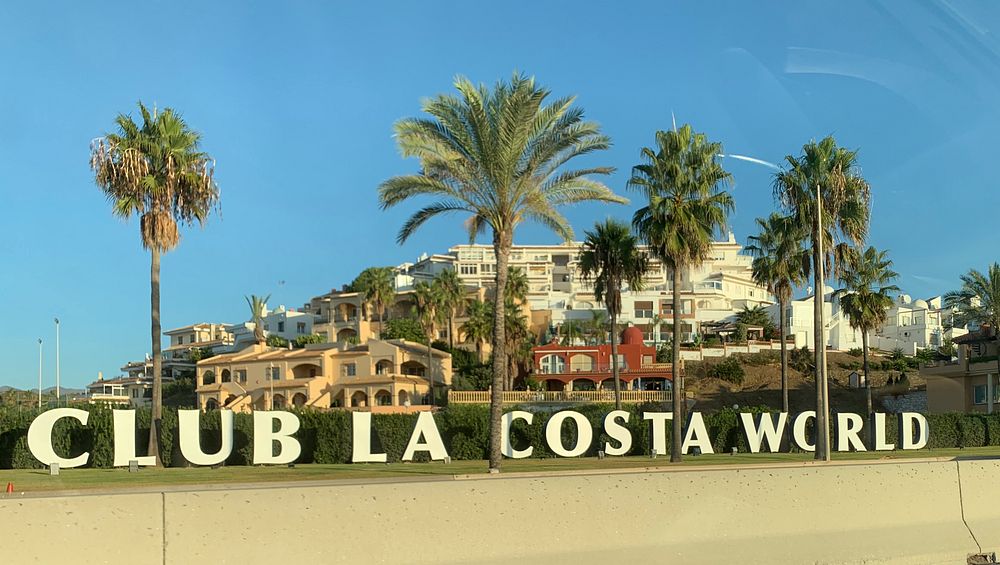
Despite some resorts attempting to limit liability for compensation by placing parts of their operations into insolvency, they largely remained open, continuing to welcome holidaymakers and timeshare owners.
The parts that did close were high-pressure sales teams — most of whom were not Spanish citizens.
Resort owners also switched to marketing accommodation to regular holidaymakers.
The argument that Spain will face dire economic consequences unless timeshare firms are protected from paying legally ordered compensation is presented here as flawed. The claim is that there is no evidence of wide-ranging national repercussions.
Only a dent in the personal fortunes of timeshare barons.
Grim tactics
RDO’s current mission — to persuade Spanish policymakers to remove or weaken legal restitution for thousands of distressed timeshare owners — is described as part of a wider pattern.
Since the courts and laws began penalising resorts for mis-selling, critics say those businesses have sought to delay or avoid paying court-ordered compensation by using their financial resources to obstruct the legal process.
Given the age profile of many owners, some observers believe the strategy is to drag cases out until claimants die before proceedings conclude.

Fighting back on behalf of owners
Lawyers and consumer advocates say they are determined not to let timeshare businesses bulldoze the legal system or bury legitimate claims under waves of delay.
Thousands of cases have already been successfully pursued through the courts — from first instance, through appeals, and even to the Spanish Supreme Court.
In the UK, similar battles have taken place, including a recent High Court victory in which loans used to purchase timeshares were ruled unlawful, and lenders were ordered to refund large sums.
A counter-campaign is now being led by European Consumer Claims (ECC) and associated lawyers to ensure that Spanish politicians considering changes pushed by the RDO timeshare “cabal” are presented with what ECC describes as the broader, more accurate picture.
"ECC will be writing to the various national and regional heads of ministries that were subjected to RDO propaganda, and will ensure that they understand the true economic situation – including how timeshare companies in this country have enriched themselves through aggressive and deceitful sales methods," explains Greg Wilson, CEO of ECC.
"We will also be publishing open letters in media addressed to politicians both in Spain and the UK."

"ECC will publicly share case studies of many owners who are vulnerable, and distressed. We will ask the parties and ministries in Spain that have been persuaded to participate in the legal amendments to reassess the position. Unlike the secretive lobbying conducted by RDO and its members, ECC will publish our appeals for support for the many timeshare owners that have suffered from devious and unlawful selling.
"One obvious question we will be asking is why politicians from regions like the Basque country would be interested in backing these amendments, when there are no timeshare operations in their constituencies."
ECC: Leading the fight back
If you have been treated unfairly by a timeshare company, get in touch with our team to understand your options.
Related Posts

World’s third largest timeshare company accused of deception and customer abuse ‘Bonus’ weekend stay Greenwich social worker Raymond Hill, 53 and his wife Anthonia were invited to what seemed like a...

Sizeable Marriott award payout as members move to claim compensation for illegal contracts Happy owners Myra Bromfield, 55, and husband John bought their first two weeks of Marriott timeshare around 1998, at the Marri...
Spanish law 4/2012 has been updated to include a controversial 'sunset clause,' meaning that timeshare claims now have a time limit Decades of consumer abuse Since the early 1980s timeshare companies have been enrichi...

Following the discontinuation of the sales department more than four years ago, CLC World have started once again to sell timeshare points. Since they paused their timeshare sales operation in 2021, CLC have focused on...