Club La Costa members reeling as Turkish resorts close and booking inventory shrinks in 2024

Club La Costa removes two Turkey resorts from its portfolio, citing changes to Turkish tourism laws
All-members email
CLC World emailed its full membership database on 10 January 2024 with a direct update: two Turkey resorts have been removed from its inventory with immediate effect.
The message states that Kusadasi International Golf Resort (KIGR) and Apollonium Spa and Beach Resort (ASBR) are no longer available for CLC members to book or exchange into.

CLC World blames new Turkish legislation for: “the closure of all our hospitality operations in Kusadasi along with significant redundancies.”
Impact on CLC members
KIGR has around 400 rooms and ASBR a further 120 – roughly 520 units in total that can no longer be used by members trying to book their annual holiday.
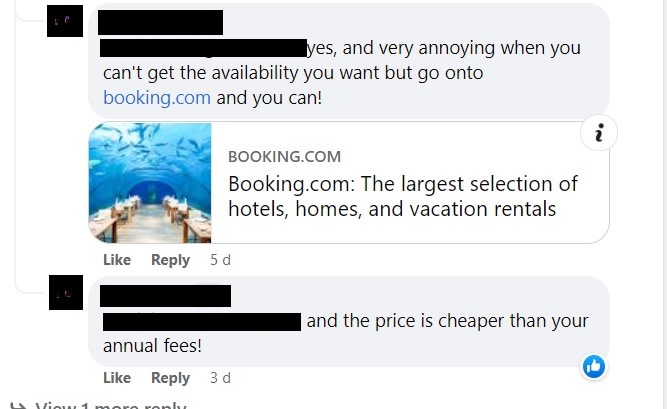
That equates to around 26,000 vacation weeks being removed from the yearly inventory available to long-suffering CLC members – many of whom already cite poor availability as their main issue on review sites and across social media.
“Both Kusadasi and Apollonium had dedicated guests who returned year after year,” says Greg Wilson, a CLC expert working for European Consumer Claims (ECC). “Many of these people will now be looking to book into other CLC resorts, further increasing pressure on an already buckling system.”
“Guaranteed” rental returns gone
“Hundreds of people also bought freehold in these resorts,” continues Wilson. “They were sold on the promise of guaranteed holiday rental income from those properties. This is income that they will now no longer earn.”
“The CLC freehold owners in question paid up to €250,000 each for their apartments. Without the rental returns they were guaranteed, and taking into consideration the catastrophic crash in the value of the Lira, those apartments are probably worth 75% less today than the amount the owners paid for them.”
The Turkish ‘Airbnb law’ cited by CLC World
The Turkish legislation CLC World points to as the reason for ending operations at Kusadasi Golf and Apollonium is commonly referred to as the ‘Airbnb law’. The law states that 100% of owners within the floor of a building must agree to short-term holiday rentals in a complex. Without that agreement, owners may not rent their units to tourists.
The CLC World email, however, does not mention that only the owners on any given floor need to agree to short-term rentals on their own floor – something that, in a resort largely controlled by CLC World, may be achievable.
Instead, it tells members: “100% of a (whole) complex must vote in favour of it being used for short term touristic purposes.”
Suspicious motives
If the email’s interpretation were correct, it would make it close to impossible for owners to rent out their properties as holiday lets.
“This obvious discrepancy between the actual law, and the CLC email explanation seems telling,” says Andrew Cooper, CEO of ECC. “If you only need residents on any particular floor to be in agreement, then that seems like an achievable goal for at least parts of both complexes.”
“There are over 70 timeshare resorts in Turkey who logically must be facing this same issue. Yet we are only hearing about resort closures from one company.”
“CLC seem to have given up on their two Turkish resorts suspiciously easily.”

The email offers members vague assurances of “doing everything we can” and remaining “committed to delivering holidays.”
It also says CLC will “be in touch again as soon as we have further definitive options.”
Disappearing company
CLC World’s legal difficulties are widely known. The company have been found liable in court for tens of millions of pounds worth of compensation because of decades of illegal sales practices.
Since late 2020, CLC have used various tactics to avoid paying this legally mandated compensation, including placing many associated companies into administration and liquidation.
They have also removed much of their branding in favour of new partners Wyndham, renaming resorts and swapping out decades-old signage.

The apparent ease with which CLC has walked away from this inventory has led some industry observers to question whether the beleaguered company is using the change in law as another opportunity to scale down and sidestep financial responsibilities.
“CLC can’t be blamed for a change in Turkish law,” notes Suzanne Stojanovic, spokesperson for Timeshare Advice Centre (the marketing arm of ECC). “But, if one were cynical, the speed with which they appear to have accepted the situation – and the apathetic tone of the email when it comes to solutions for members – could be read as the company being quietly grateful for the opportunity this has presented.”
“This is a company intent on removing its identity whilst putting a succession of its ‘sub companies’ into administration, and suddenly, through no fault of their own, yet more responsibilities have been divested. It might be convenient for CLC’s plans, but it certainly isn’t good for their owners.”
What now for CLC members?
Club La Costa chairman Roy Peires’s well publicised email to members last year highlighted multiple expensive new projects the company is investing in – a clear display of corporate financial liquidity.
If you are a CLC member who feels they got a poor deal, were mis-sold, or that the company is not living up to the promises made at the point of sale, get in touch with our team to explore your options regarding financial compensation and/or relinquishment.
Related Posts

World’s third largest timeshare company accused of deception and customer abuse ‘Bonus’ weekend stay Greenwich social worker Raymond Hill, 53 and his wife Anthonia were invited to what seemed like a...
Sizeable Marriott award payout as members move to claim compensation for illegal contracts Happy owners Myra Bromfield, 55, and husband John bought their first two weeks of Marriott timeshare around 1998, at the Marri...
Spanish law 4/2012 has been updated to include a controversial 'sunset clause,' meaning that timeshare claims now have a time limit Decades of consumer abuse Since the early 1980s timeshare companies have been enrichi...

Following the discontinuation of the sales department more than four years ago, CLC World have started once again to sell timeshare points. Since they paused their timeshare sales operation in 2021, CLC have focused on...