UK airport chaos hits timeshare owners hardest as flight cancellations continue
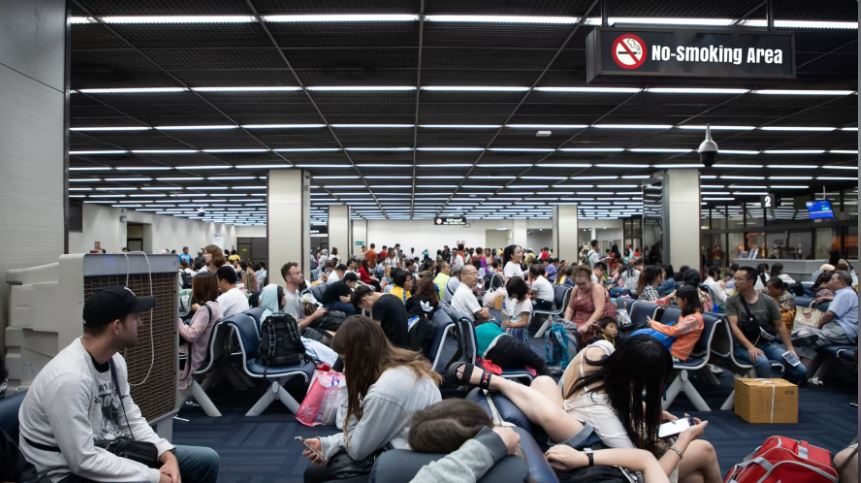
UK flight cancellations and airport disruption are pushing many holidaymakers to stay at home or change their plans at short notice. For timeshare owners, that flexibility often isn’t available – and it can raise real questions about fees and refunds.
Airport chaos causes disruption
May and June 2022 were particularly difficult for UK travellers. In one weekend alone, a reported 159 flights were cancelled at Gatwick Airport.
EasyJet was among the worst affected, cancelling 80 scheduled flights on a Sunday.
With thousands of passengers delayed overseas and baggage piling up at UK airports, it was widely expected that disruption would continue for some time.
Anyone who has seen the 1987 film Planes, Trains and Automobiles will have a sense of the stress involved. This time, though, it wasn’t one person trying to get home – it was thousands, including:
- A couple who hired a car in Berlin and drove 850 miles back to Staffordshire.
- Two teachers who travelled for 12 hours on three buses to return from Croatia.
As often happens in major travel disruption, responsibility was disputed – with the government blaming the airline industry, and the airline industry blaming the government.
With summer approaching, the outlook fuelled concern and led many people to look at alternatives to flying.
A change of plans
With ongoing uncertainty, many people began rethinking overseas holidays because of the risk of last-minute flight cancellations and the knock-on impact on other arrangements.
A holiday involves more than catching a flight. It can mean booking annual leave, arranging pet care, organising car hire and planning transfers.
For some, a staycation can be an attractive option, whether that’s a campsite, hotel break or a canal boat holiday.
People who have booked holidays can often cancel and receive a full refund, so changing plans may be straightforward.
Even if someone books accommodation at a timeshare resort through a platform such as Booking.com (many resorts now accept non-members), they may still be able to recoup some of the cost, depending on the booking terms.
Not so easy for timeshare owners
However, while many travellers can switch plans or seek refunds when flights are cancelled, the CEO of European Consumer Claims, Andrew Cooper, says timeshare owners are likely to be hit hardest.
"As we saw during the pandemic, timeshare resorts will charge annual fees in full whether the clients are able to use their holidays or not."
He adds that this "once ground-breaking holiday system is too inflexible for the challenges of the modern traveller."
Timeshare owners often need to plan well in advance to secure accommodation – sometimes years ahead. That can be at odds with how many people now travel, where flexibility to decide week by week can matter, especially during periods of UK airport chaos.
Mr Cooper highlights recurring issues for members trying to adapt when travel plans change. "Timeshare resorts tell prospective clients that they can exchange to different times and locations, but in reality, those systems don't work. There are expensive annual fees to be a member of an exchange system, and there are even more costs to actually make an exchange or bank a week. You can't bank a week at the last minute (for example if EasyJet cancels your flight when you reach the airport.)
He also notes that, with resorts more cash-strapped than ever, they may be less forgiving when members can’t travel.
"Unlike regular hotels, they can't afford to refund the money that members must pay every year in order to use their accommodation. This has resulted in many members paying for holidays they couldn't take in both 2020 and 2021."
The concern is that members could face the same problem again in 2022 – paying for a third year of holidays they cannot take.
"The timeshare industry's stance is that this is an unusual set of events, and they are not to blame. But that is really the point. The world is an uncertain place, and when unforeseen events mean a holiday is cancelled, timeshare just isn't flexible enough to accommodate people's needs. The resort is guaranteed their money but the customer is not guaranteed what they paid for."
Do you own a timeshare and want to explore your options for leaving the membership? Contact our friendly team at the Timeshare Advice Centre for a no-obligation assessment.
Related Posts

World’s third largest timeshare company accused of deception and customer abuse ‘Bonus’ weekend stay Greenwich social worker Raymond Hill, 53 and his wife Anthonia were invited to what seemed like a...
Sizeable Marriott award payout as members move to claim compensation for illegal contracts Happy owners Myra Bromfield, 55, and husband John bought their first two weeks of Marriott timeshare around 1998, at the Marri...
Spanish law 4/2012 has been updated to include a controversial 'sunset clause,' meaning that timeshare claims now have a time limit Decades of consumer abuse Since the early 1980s timeshare companies have been enrichi...

Following the discontinuation of the sales department more than four years ago, CLC World have started once again to sell timeshare points. Since they paused their timeshare sales operation in 2021, CLC have focused on...